
In order for a writer to succeed, I suggest three things – read and write – and wait.
Countee Cullen
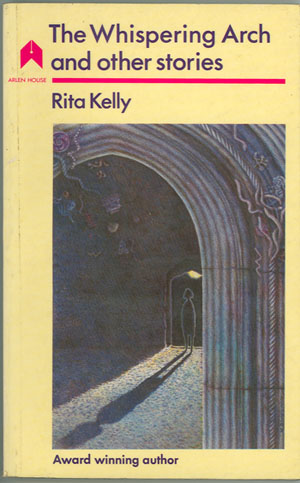
I have found that looking back on my own writing, particularly essays, can be a daunting task that becomes easier the more time has passed since the work was initially written. Attending my first research seminar of the semester, ‘Revisiting thus the glimpses of the moon’, about Rita Kelly’s reflections on her own works decades after they were first published, was an interesting prospect for me, given my dislike of my own work immediately after I have finished writing it. I shudder when even contemplating re-reading essays I have written in the past few years so was intrigued by a perspective that was cultivated after decades more experience.
Re-reading my own notes on the seminar seems to have proved most difficult when writing this post, given my frankly abhorrent handwriting, and yet I find it far easier to do given they are mostly the words of another. Kelly noted in her seminar how she approached her own work as a reader rather than the author, thinking of the author as another person rather than a past version of herself. A term that came up frequently was “hermetically sealed”, to describe how the poems had been left for years until she revisited them. I imagine the prospect of writing a PHD on one’s writing is an uncommon one to have, so hearing first hand about the context the poems were written in helped immensely in understanding where Kelly was coming from. Her influences on her own writing were clearly laid out, and she could find the meaning she had hidden in her own work as if she had just written them, in addition to finding subtle ideas she had subconsciously inserted decades prior.
Revisiting one’s own work can have a profound impact on our future work, or in this particular case, one’s postgraduate degree. Knowledge of one’s own shortcomings or successes in writing should be of great concern for any writer, academic or creative. Noting the influences on your own writing, as Kelly covered in her research seminar, is very important when contextualising past work and for future writing. Writing is always in the moment, as we carry our experiences and the world around us into the text. Separating the context from the text is an inherent failure in understanding any artistic undertaking. It is a great disservice to criticism, academic or otherwise, to fail to consider this. Kelly’s poems were interspersed with Irish language, as a result of her environment at the time she was writing, for example. In fact, my issues with broader criticism, or media literacy as a whole, are too broad to be tacked on here and deserves a post of its own.