
Mystery is my mistress. I must heed her sweet call.
Velma Dinkley
The history of Ireland is inextricably linked with colonisation and the features that go with it. As someone who enjoys the context of any piece of writing to enhance the text itself, a seminar on the ways a decade of centenary commemorations should be celebrated in Ireland interested me. The research seminar by Dr. Heather Laird, titled ‘Remembering Lost Trajectories:
Commemoration and Decolonisation on the Centenary of 1922′ gave me a number of things to think about moving forward with my own criticism, like perhaps examining the impact specific moments in history have on writing and works of literature. Briefly mentioned at the end of the seminar was the impact of the land wars and rural unrest on Ulysses, which gave me pause enough to perhaps examine more closely the link between major historical actions on popular literature. The impact of decolonisation, an ongoing process in many parts of the world today including, to some degree, Ireland and its universities, was also highlighted throughout the seminar, which examined the links between commemoration and decolonisation in the context of Ireland’s centenary celebrations.

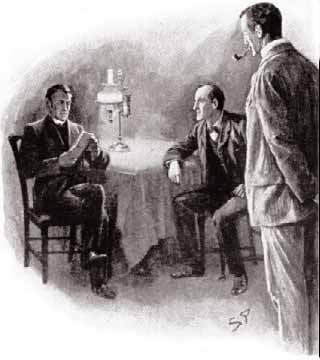
I must admit that decolonisation does not factor into my particular field of interest as much as colonisation itself, given my liking of Victorian mystery fiction. There is, however, a clear link to be made between the writing of the time and the moment in history they were written in. The formation of the Metropolitan Police Force in the 19th century was a clear turning point for detective fiction, as a professional force of ‘Peelers’ would act as law enforcement in London. The industrial revolution similarly impacted detective fiction through an increase in newspapers, sensationalised stories and public fascination with the macabre. Penny dreadfuls became a trend as the British population devoured stories of detectives and criminals. It is with this backdrop that the Sherlock Holmes stories were published to great success in The Strand magazine. To discount the impact the conditions that gave rise to these types of stories is to remove important historical context, as if to pretend these stories formed out of a vacuum. In a similar manner, we cannot celebrate centenaries without examining the background and historical context for the moments we celebrate. Private property rights in Ireland seem almost inseparable from the Irish state itself given the impact the agrarian agitation had in the 19th and early 20th century. This links back to efforts of decolonisation in Ireland, as a former colony of England where Irish workers lived and farmed on British owned land, and the seminar made sure to note the impact this divide between landowner and worker had on future events throughout the land wars in Ireland.
I have found there is always something interesting to learn from talks and seminars, even if they only indirectly impact my own areas of interest. This goes from getting a deeper appreciation for the background to a writer’s work to examining what parts of history we celebrate and which we should work to diminish the importance of in an effort to decolonise our way of thinking.