

“Nothing clears up a case so much as stating it to another person”
Sherlock Holmes – The Memoirs of Sherlock Holmes
I had my reservations about the mini-conference when I first heard of it all those months ago. Prior to doing my Higher Diploma in English last year, I had never really properly presented my ideas like what would be expected. Having completed 2 seminars as part of my Hdip (on post apocalypse literature and Tolkien’s middle English), I at least had some experience in presenting for around 8 minutes using a set of slides and notes. For the format of the mini-conference, we all followed the strict format of the pecha kucha.
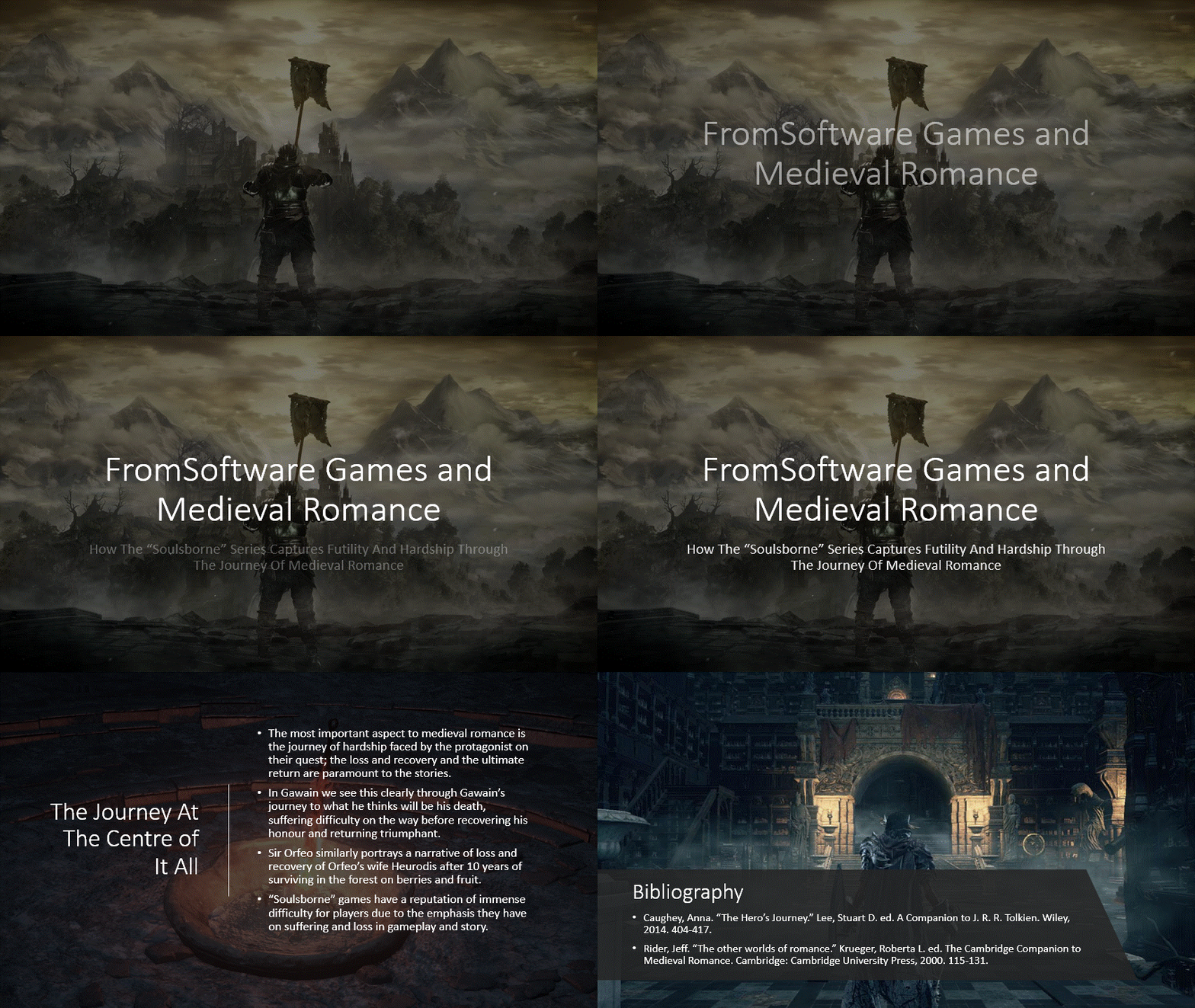
Using a pecha kucha reduced any downtime between ideas and would ensure everyone’s presentation fit within the time limit allowed for each panel. It also meant I had to forego any proper notes, maybe relying on one or two ideas per image/slide. My initial ideas for the presentation revolved around Sherlock Holmes as a character, and how he had been adapted in different shows and films (and video games). My research area moved more specifically into the reaction and interaction of the reader and audience (and player). With this in mind, I changed course. The first draft of my presentation on three different adaptations of The Hound of the Baskervilles lacked any mention of the audience so I removed and altered slides, allowing more time to mention why the character of the hound is integral, in my view, to a successful adaptation with regards to how the audience thinks and reacts to the unraveling mystery.
As a late addition to the design team, our job was essentially done by the time the 6th April rolled around. I feel I must apologize for the typo in the time for the final panel which I failed to catch when finalizing the schedule, listing it as ending half an hour later than it should, but it went fine on the day. I can only imagine the confusion such a mistake would have had for any of the other panel times. I must admit that the time between panels felt a bit long, particularly for the first tea/coffee break which would have been fine at half the length.
We aimed to arrive at around 9 on the morning of the mini-conference. The North Council Room required re-arranging to fit our purpose so that had to be done before anyone showed up to watch our presentations. The tech also had to be working before guests appeared. Putting all the presentations on the one USB stick proved really useful as we could switch between slideshows with relative ease (relative here hinging on the “mouse”/trackpad for the pc working reasonably well). Having presented our dissertation ideas just days prior, I’m sure most of us knew what to expect when presenting, with the previous sessions in the North Council Room helping to set expectations well.
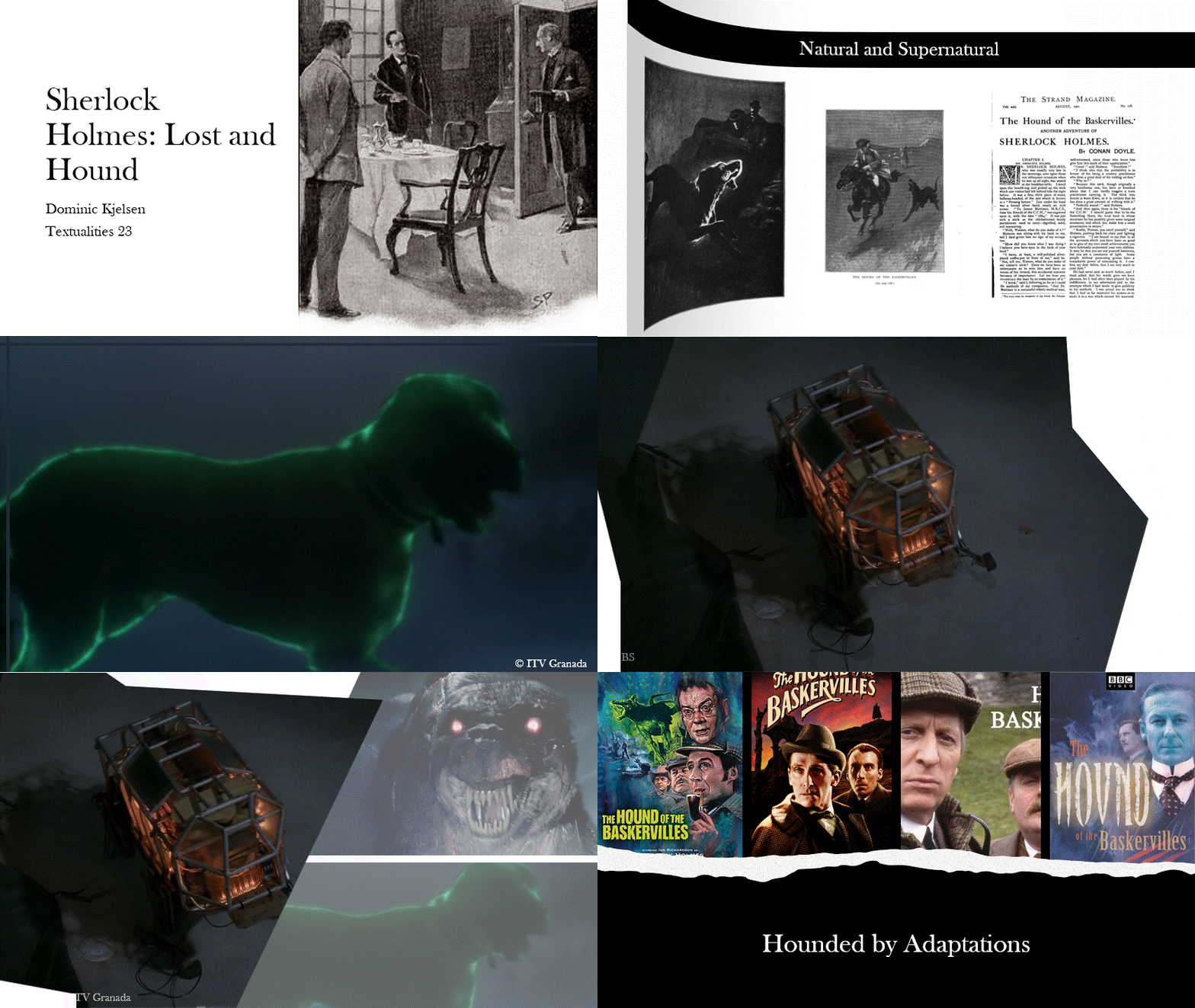
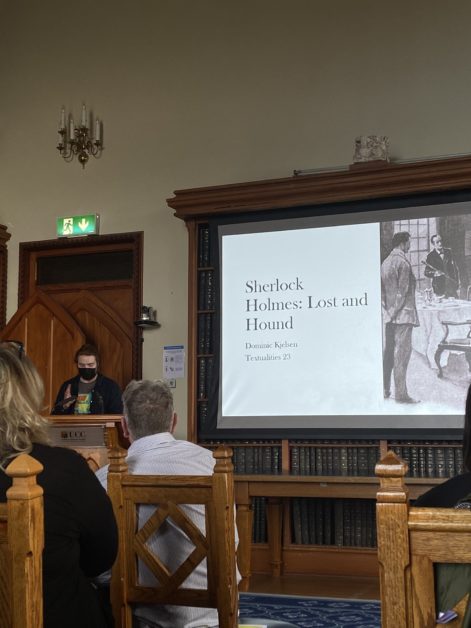
As part of the first panel, second presenting overall, I looked forward to the rest of the day after my pecha kucha was done when I could stop worrying about my presentation going well. In all, it could have gone better but I was mostly happy with what I talked about. Hopefully my points got across reasonably well, even if I could have gone into further detail. The set time limit meant that talking about the subject in depth was out of the question so it was relatively easy to make my most important ideas known. The questions after the panel were also easier than expected to answer, though that may speak to how much I recalled of my preparation of the topic. I had no notes along for the slides, relying as much on memory as prior knowledge to make my way through the slides.
My choice of t-shirt was at least noticed. I could have shifted my entire research focus in how Scooby-Doo introduces a young audience into the ‘game’ that seems inherent in all good mystery stories. The entire premise of a dog involved in the mystery tied in well with my presentation on the day as well.
The ‘game’ such as it is was not really mentioned in my presentation, although at the moment it is the primary focus of my research. The narrative structure of mystery stories like the Sherlock Holmes canon allows the reader to, in a way, interact with the story, guessing the villain and looking for clues present in the text to discover the truth before even the detective does. I briefly mentioned the video game adaptation of Hound, of which I have played little, and I could have gone more in depth with how the format of a hidden object game puts the player in a heightened position compared to the reader of the source material, directly involved in the investigation rather than looking on from the outside.
After the tea and coffee break, I could sit down and appreciate the work done by everyone else in the two MA English courses. Listening to people talk passionately about their interests has lead me to watch multiple hour long videos on YouTube, sometimes multiple times.
With my presentation over, I mostly just sat and watched for the next 5 hours (with breaks in between, of course). It was overall a very enjoyable day, though I feel I could and should have done better with my own presentation, but I had fun listening to all the other pecha kucha presentations.