

“Ah, but my dear sir, the why must never be obvious. That is the whole point.”
Agatha Christie – Five Little Pigs
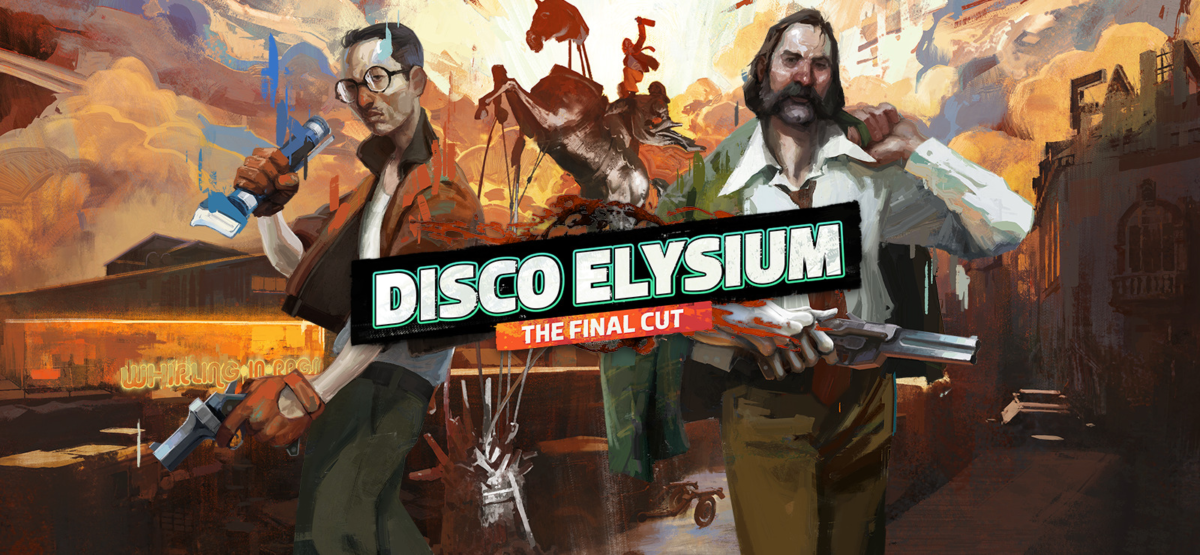
As nebulous as my thesis is at the moment, I have some idea of the different aspects of detective fiction I want to focus on. The main suspect in terms of primary texts will be the Sherlock Holmes stories, of which I will refer to the annotated version edited by William S. Baring-Gould. In addition, I will look at some of Agatha Christie’s work, like The Murder of Roger Ackroyd for example, when focusing on the role of the reader in terms of detective stories. As my thesis revolves around reader/audience participation, I will also look at some detective video games, notably 3 of the more recent Frogwares Sherlock Holmes games, though others may also come into play. With such a wide scope of primary sources, I will need to rely on a vast swathe of secondary criticism and essays when examining the concepts I want to develop in my thesis. Some of these sources will be found online, especially the video game related ones, given the lack of print media surrounding the medium, and others more traditionally in books and journals, like Adaptation (Oxford University Press) and Books to Die For edited by John Connolly and Declan Burke in which crime authors shed light on some of their favourite works of detective fiction, which may prove a unique perspective on reader interactivity when coming from an author.
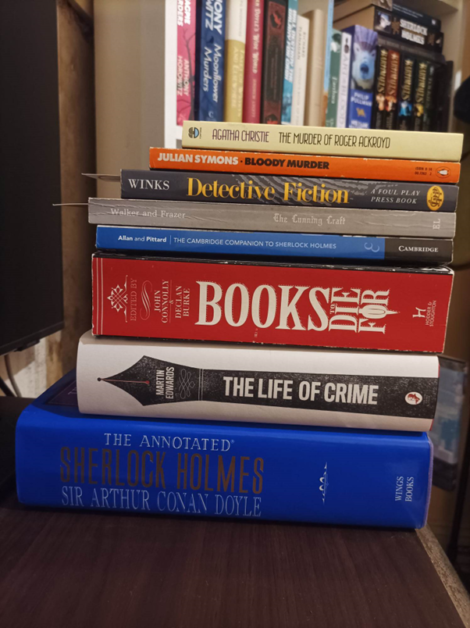
The starting point for all my research has been The Cambridge Companion to Sherlock Holmes, with the essay on adaptation in particular standing out for me, given the lack of references Neil McCaw makes to video game adaptations, focusing on primarily film and television. This is not all bad, as the audience’s reaction to a filmed adaptation of, say, Holmes is an interesting prospect to examine in terms of the overall ‘game’ involved with detective fiction. The journal Adaptation has proved invaluable when sourcing knowledge for adaptations of Holmes and, notably, includes references to video games across many articles, including Playing the Classics: Constructing a Digital Game Adaptation Database by John Sanders which provides a useful database of video games adapted from literary classics, including Sherlock Holmes and Poirot (the database, as it is in its infancy at the moment, can be found here). Linda Hutcheon’s A Theory of Adaptation will also be used when cross-examining adaptation and audience, and also includes plenty of references to video game adaptation, though given the second edition is ten years old and is what will be used, there may be shortcomings in terms of modern video game adaptations (the three Sherlock Holmes games I am investigating having been published starting in 2014 up to 2021).
With some adaptation literature covered, I feel the need to turn to the question of the role of the reader. There are a myriad number of essays about the reader, so I will focus primarily on The Detection Formula and The Act of Reading by George N. Dove, which examines Wolfgang Iser’s The Act of Reading in terms of detective fiction and its formula. Dove highlights how the formula present in detective fiction allows for a certain degree of interaction which is only clear “when we undertake an examination of the reading process itself, the interaction between reader and text, that the special quality of the tale of detection becomes evident” (Dove 37). Edmund Wilson’s scathing takedown of detective fiction in Who Cares Who Killed Roger Ackroyd provides a different perspective on the reader’s role in detective fiction, with Wilson comparing the reader of detective fiction as an addict, having a vice ranking somewhere “between smoking and crossword puzzles” (Wilson 39). This view of the genre helps give an overview of the reader of detective fictions avid need to consume mystery stories, wherein the “addict reads not to find anything out but merely to get the mind stimulation of the succession of unexpected incidents” (Wilson 39). This point of view will be interesting to compare to the more interactive elements found in detective video games where the player has an active role in solving the murder rather than just going along with the author and detective’s whims.
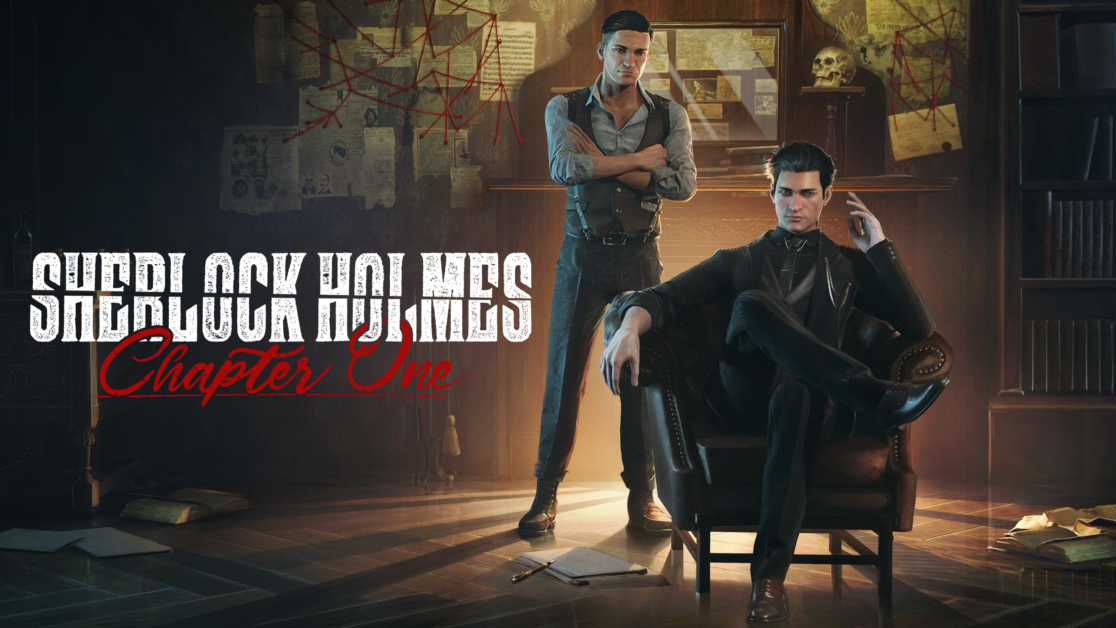
The ’game’ that I have previously referred to differs from the Sherlockian game that shares its name. The ‘game’, such as I am examining it, refers to the interactivity between reader and the text which is especially apparent in detective fiction, as the reader attempts to ascertain the answer before the detective, usually possible due to the clues and puzzles presented in the narrative that the author includes for such a reason. While Doyle’s stories will be the primary focus of my thesis, Agatha Christie’s work set the bar for clues and puzzles present in detective fiction. Christie’s Clues as Information is a chapter in The Bloomsbury Handbook to Agatha Christie that I am using as a comparison point, especially between Christie’s detectives and video game detectives. Clues “dis-informing the reader to the extent required to make the story work” cannot be used in detective video games where the player must make the choice at the end of the case and accuse (one would hope) the culprit (Kazmer 64). I want my thesis to examine this interactivity between player and case, and explain the similarities and differences of playing the game to merely reading a detective novel.
My hope is that the above works provide a basis for me to write my thesis examining untouched elements in adaptation and ‘reader’ interactivity with detective fiction. One interesting aspect of adaptations is prior knowledge (which in detective fiction normally means knowing whodunnit) and I am curious to expand outside the literature briefly examined here to find existing works regarding adaptations of stories in video game forms, such as those found in Sherlock Holmes: Crimes and Punishments which adapts stories from the Holmes canon. How does the game work to incorporate a priori knowledge of the case (either from the source stories or other adaptations) for example? The differences required in adaptation as outlined in Hutcheon’s work are further changed due to the format of video games.
As a blog post, this is rather different to my usual writings. As an examination of existing literature on my chosen thesis topic, it is incomplete and can always be further added to. With this in mind, any interesting literature I come across for my thesis will be noted and perhaps added in a later post. While I have access to plenty of books on the topic of detective fiction (as well as the detective novels themselves), many of the books are from the 90s or earlier. As such I have turned to the internet to try and find literature related to the topic. The internet can be a vast library of information, perhaps too much when trying to narrow one’s search to a very specific topic. As such, I will keep looking for relevant material over the next few weeks as my thesis becomes clearer and less nebulous.
Bibliography
Christie, Agatha. The Murder of Roger Ackroyed. Fontana, 1990.
Connolly, John, and Declan Burke, editors. Books To Die For. Hachette, 2014.
Doyle, Arthur Conan, and William Stuart Baring-Gould. The Annotated Sherlock Holmes: The Four Novels and The Fifty-Six Short Stories Complete. Wings Books ; Outlet Book Co. [distributor], 1992.
Evans, Mary Anna, and J. C. Bernthal. The Bloomsbury Handbook to Agatha Christie. Bloomsbury Publishing Plc, 2022, http://ebookcentral.proquest.com/lib/uccie-ebooks/detail.action?docID=7045787.
Hutcheon, Linda, and Siobhan O’Flynn. A Theory of Adaptation. 2nd ed, Routledge, 2013.
McCaw, Neil. ‘Adapting Holmes’. The Cambridge Companion to Sherlock Holmes, edited by Christopher Pittard and Janice M. Allan, Cambridge University Press, 2019, pp. 199–212. Cambridge Core, Cambridge University Press, https://doi.org/10.1017/9781316659274.015.
Sanders, John. ‘“Playing the Classics: Constructing a Digital Game Adaptation Database”’. Adaptation, Feb. 2023, p. apac019, https://doi.org/10.1093/adaptation/apac019.
Walker, Ronald G., and June M. Frazer, editors. The Cunning Craft: Original Essays on Detective Fiction and Contemporary Literary Theory. Western Illinois University, 1990.
Winks, Robin W., editor. Detective Fiction: A Collection of Critical Essays. Foul Play Press, 1988.